Locations:





 Search
This handy fruit is packed with nutrients that can benefit your heart, gut and immune system
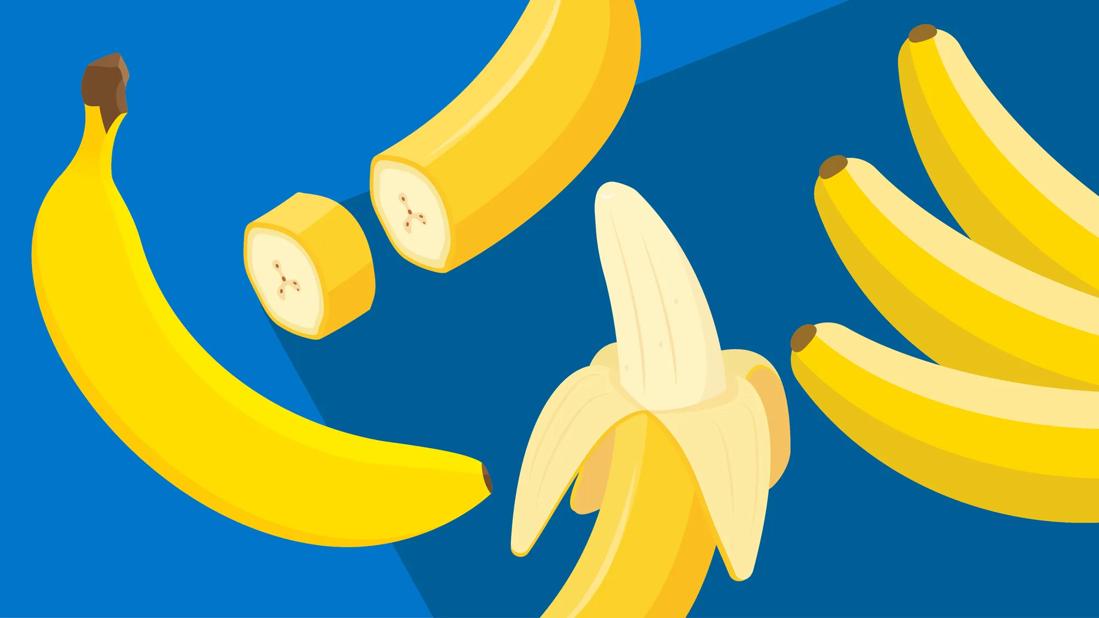
Image content: This image is available to view online.
View image online (https://assets.clevelandclinic.org/transform/acd079d4-e9e3-4963-bb86-c7a3e38a0618/bananas-2211071428)
Illustration of peeled, sliced and whole bananas
It’s easy to see why some call bananas “nature’s perfect snack.” The curved yellow fruit is conveniently packaged for on-the-go eating after all. Just peel back that exterior skin and take a delicious bite.
Advertisement
Cleveland Clinic is a non-profit academic medical center. Advertising on our site helps support our mission. We do not endorse non-Cleveland Clinic products or services. Policy
But while simplicity and yumminess are definite pluses, the true benefits of bananas involve what they offer nutritionally.
Let’s take a healthy look at the popular fruit with registered dietitian Elyse Rottinger, RD, LD.
So what do you get when you peel and eat a banana? A medium-sized ripe banana (7 to 8 inches long) contains:
A list of vitamins and nutrients is nice, but it can be more important to know what all that good stuff does for your body. Here’s some of what bananas offer.
Being a higher-fiber food makes bananas fabulous for digestion and overall gut health.
Bananas contain both insoluble and soluble fiber to keep your bowel movements regular while boosting your gut’s microbiome. “It’s a food that can help keep things moving in your intestines,” says Rottinger.
The fruit is also gentle on your gastrointestinal tract, making it a star in the BRAT diet that’s a go-to for easing a queasy stomach. (The B in BRAT stands for banana.)
Advertisement
Eating bananas can help keep your blood pressure (BP) managed. The reason? Potassium.
Potassium works to lower blood pressure by helping your body get rid of sodium (which, as we all know, can drive your BP higher). Potassium also eases tension on blood vessel walls to help reduce blood pressure.
The American Heart Association recommends eating bananas and other potassium-rich foods to manage high blood pressure (hypertension) and lower your risk of heart attack and stroke.
No offense to apples, but maybe it’s a banana a day that keeps the doctor away.
The vitamin C packed in a banana can boost your immune system’s ability to fight illness, notes Rottinger. Vitamin C is an antioxidant that neutralizes free radicals before they cause cellular chaos in your body.
Other vitamins and nutrients in bananas are known to decrease your risk of:
Dopamine is also found in bananas. In addition to impacting your mood, it acts as an antioxidant that protects against inflammation.
“Bananas are rich in important nutrients and antioxidants,” says Rottinger. “Including them regularly in a healthy diet is one of the best ways to reduce inflammation and support your immune system.”
When you eat a banana, your belly will feel full for longer thanks to the dietary fiber in the fruit, says Rottinger. Keeping those hunger pangs at bay can keep you from making less-than-healthy snack choices between meals that can result in extra pounds.
“It’s a great idea to pair bananas with a high protein food to keep you even more satisfied,” she recommends. “Top Greek yogurt with banana slices or spread nut butter on slices for a delicious snack.”
Bananas may qualify as a performance-enhancing fruit. Research shows that bananas can mimic sports drinks in how they fuel athletes to improve performance and aid post-workout recovery.
Some of that is due to the potassium and magnesium in bananas, explains Rottinger. Both are electrolytes that help your heart, muscles, brain and nerves function.
“The high amount of vitamin B6 in bananas also helps your body produce energy, making them a smart snack to have before a workout,” she adds.
Bananas can help level out your blood sugar IF you eat them at the right time. (Hence, the asterisk.)
That’s because the sugar content in a banana varies depending on its ripeness. Green (or unripe) bananas are high in resistant starch, a type of fiber your body can’t digest. Resistant starch helps steady blood sugar by slowing the release of glucose (sugar) into your blood.
Advertisement
But as bananas ripen, that resistant starch changes to sugar that digests more quickly and causes a spike in blood sugar.
“I often hear people say they avoid bananas since they’ve heard the fruit is too high in sugar,” shares Rottinger. “But it depends on where the banana is in its ripening process. Green bananas can contain less than half the amount of sugar than ripe ones.”
For those concerned about blood sugar levels with more yellow bananas, pairing the fruit with a protein source (such as a handful of nuts or a cheese stick) can help better regulate the increase.
While bananas may seem like a perfect food, they may not be the best choice for you if you have certain health conditions or concerns. Here’s why.
Advertisement
Bananas are a healthy food option packed with nutrients lacking in many diets. Most people don’t consume enough fiber, for instance. The same can be said when it comes to potassium and magnesium.
They’re also versatile in the kitchen. They make a great smoothie mixer or a tasty topper on cereal or oatmeal, for instance. They’re ideal for baking, too. (Banana muffins, anyone?)
Best of all, bananas rank as one of the more inexpensive fruits in the produce aisle.
So, if you want to eat a banana a day, go for it!
Advertisement

Sign up for our Health Essentials emails for expert guidance on nutrition, fitness, sleep, skin care and more.
Learn more about our editorial process.
Advertisement

This caffeinated South American tea contains antioxidants and other nutrients that may offer some health benefits
Protein is essential in your diet, but piling more onto your plate isn’t always better
Choosing snacks with protein can help curb hunger, support muscle health and keep your energy steady between meals
Fish packs plenty of protein, heart-healthy fats and other body-boosting nutrients into every bite
Both are healthy choices, but wild-caught salmon offers a few more benefits
These bright berries are packed with nutrients and antioxidants that may support your eyes, immune system and overall well-being
Prepping ingredients ahead of time, rethinking your snacks and making smart protein swaps can up your daily intake
It’s a good on-the-go option and can help build muscle and aid in weight loss

Most breast pain isn’t a sign of cancer, but certain symptoms deserve a closer look

It’s a myth that you should avoid sleep (or have someone wake up throughout the night) after a head injury

The color and shade of your urine offer a window to your health











